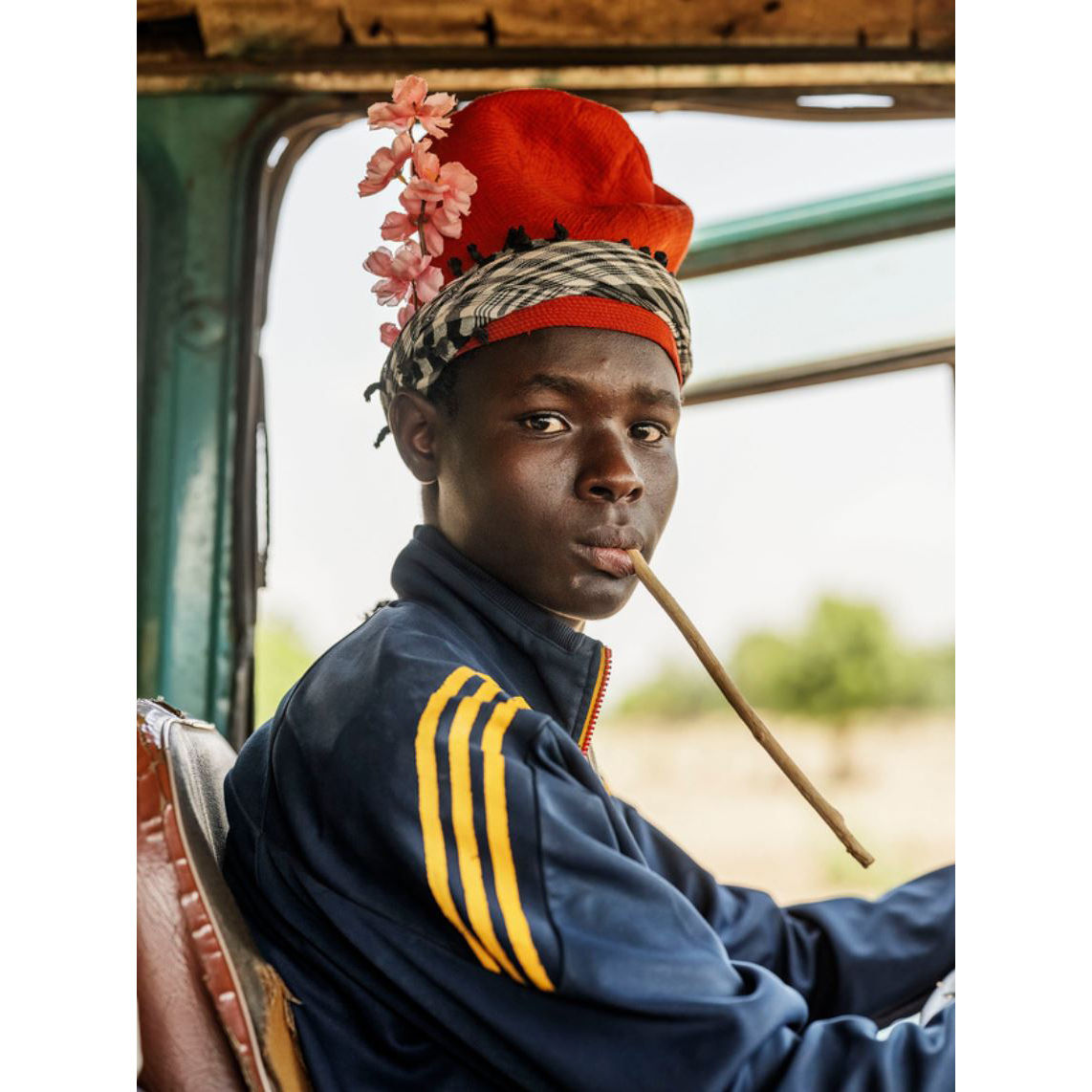
Truck driver, Kano, 2023
Archival Pigment Print
In Two Sizes
Where Hugo's earlier projects took the form of visual essays built around defined themes, What the Light Falls On follows a freer approach. Rather than working within a set framework, Hugo responds intuitively to place and time, guided by what he calls an "essential wanderlust". In this work, made over the course of over two decades, portraiture, landscape and still life converge into a conversational and deeply personal reflection on lived and emotional states.
A rumination on mortality is central to this body of work. What the Light Falls On begins with life and ends with death, bookmarked by a photo of his daughter's birth, and his late father on his death bed. "It's tied into middle age," he stated, "getting softer both physically and emotionally, the beauty and the tragedy, the cruelty and the tenderness, these cycles of life. As the philosopher Seneca succinctly observes: 'Every new beginning comes from some other beginning's end."'
